Repository navigation
fix(slack): Convert canvas HTML to Markdown on read - #2647
Conversation


|
The latest updates on your projects. Learn more about Vercel for GitHub.
|


This comment has been minimized.
This comment has been minimized.


|
|

|
I think this is generally ready to go! Just need to rebase to pull in fixes for CI. A small nit is that instead of checking |
Slack serves canvas downloads as Quip HTML. slackCanvasEdit wrote that
HTML back as Markdown, so Slack rendered the whole canvas as escaped
HTML text. Convert the body to Markdown in readCanvas so reads and
edits both work on Markdown.
Slack keeps the title h1 across a body replace, so an edit that wrote it
back would show the title twice.

a9e8291 to
06a6efd
Compare
There was a problem hiding this comment.
Cursor Bugbot has reviewed your changes and found 1 potential issue.

❌ Bugbot Autofix is OFF. To automatically fix reported issues with cloud agents, enable autofix in the Cursor dashboard.
Reviewed by Cursor Bugbot for commit 06a6efd. Configure here.

|
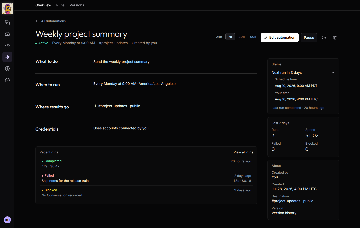
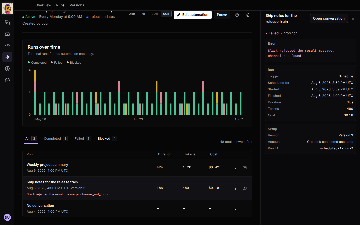
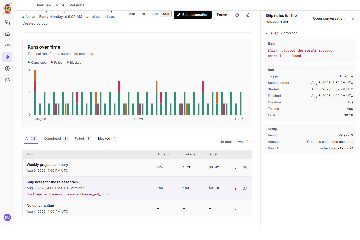
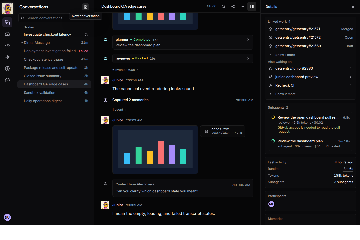
6 screenshot changes — 6 changed · 0 added · 0 removed Review screenshots in Frameshift
|


The `prepare-commit-msg` hook removes every `Co-authored-by` line, then
adds only the human actors of the current run. A run with no human actor
(PR event follow-ups, automations, child agents) adds nobody. So when
one of those runs amends or rebases, earlier credit is gone. That's how
#2647 lost dingsdax's credit: a `pull_request.comment.created` follow-up
rebased the branch and force-pushed, and none of the new commits had his
trailer.

The hook now builds co-authors from the commits being replaced, then
appends the current run's human actors. It finds those commits from Git
state:

- `--amend`, `-c`/`-C`, `reword`: the source commit. `--amend -m`/`-F`
give no commit arg, so the hook reads `--amend` from the parent `git
commit` cmdline.
- rebase `pick` and `cherry-pick`: `CHERRY_PICK_HEAD`. A conflicted
rebase step: `REBASE_HEAD`. An `edit` stop (`rebase-merge/amend`) that
makes a new commit gets no inherited credit.
- `fixup`/`squash`: HEAD plus the folded commit. Rebased merges: the
`merge -C` commit. `merge --squash`: the commits listed in `SQUASH_MSG`.

Model-written message text still can't add co-authors. Trailers are
deduped by email, and the bot is excluded.

Other bugs found while reproducing:

- The author check failed on an amend or `rebase --continue` of a commit
a person authored, because Git passes the original author to the hook.
It now accepts the author of a replaced commit only. A new commit with a
spoofed author still fails.
- A one-line unscoped subject like `chore: base` was read as a trailer
block, so `Co-Authored-By` got stuck right under the subject. The
subject paragraph is never trailers now, and a trailer key has to start
with a capital letter (or be `co-authored-by`), so `feat: x` lines in
squash messages stay body text.
- The comment block Git adds for an editor (conflicts, squash) broke
trailer detection. Trailers now go before it.
- The hook is POSIX `sh` now (passes shellcheck, tested under dash).
`-ef` is replaced with a `pwd -P` comparison.

Known limits:

- `rebase --apply` and `git am` don't run `prepare-commit-msg`.
- `-C <any sha>` reuses that commit's co-authors and author.
- The `--amend -m` detection depends on `/proc`, so it only works on
Linux (the sandbox).
- `core.hooksPath` overrides or `commit-tree` skip the hook. This is a
guardrail, not a security boundary.

Follow-up, not in this PR: runs with no human actor on a PR could credit
the PR's stored requester, so brand-new fixup commits get credit too.

<!-- junior-request-attribution:start -->
via @thomasjiangcy.
<!-- junior-request-attribution:end -->

<!-- junior-session-footer:start -->
<!--
junior-conversation-id:agent-dispatch%3Adispatch_2f266e56e30de8bcdda52e3d36433743
-->

--

[View
Session](https://junior-prod.sentry.dev/conversations/agent-dispatch%3Adispatch_2f266e56e30de8bcdda52e3d36433743)
[[Sentry]](https://sentry.sentry.io/explore/conversations/agent-dispatch%3Adispatch_2f266e56e30de8bcdda52e3d36433743/?project=4510944073809921)

<!-- junior-session-footer:end -->

---------

Co-authored-by: sentry-junior[bot] <264270552+sentry-junior[bot]@users.noreply.github.com>
Co-authored-by: Thomas Jiang <20501235+thomasjiangcy@users.noreply.github.com>


Canvases that Junior edits end up showing raw HTML. The TPM digest canvas
F0CE40T1DUHis one example. Its body is now one paragraph of escaped<div class="quip-canvas-content"><h1 …>…text. The original document is nested inside that paragraph, and its heading ids match the outer heading.Root cause:
readCanvasdownloads the canvas fromurl_privateand returns the bytes unchanged. Slack serves that download as Quip HTML, not Markdown.slackCanvasReadsays it returns Markdown, but it returns this HTML.slackCanvasEdittakes the HTML, applies the edit, and writes it back withdocument_content.type: "markdown". Slack then escapes all of it as literal text. So every edit on a real canvas breaks it. AslackCanvasWriteof content fromslackCanvasReadbreaks it the same way. The tests did not catch this because their fake download returned Markdown.Fix:
readCanvasconverts an HTML body to Markdown withnode-html-markdown, which is already a dependency. It also maps Quip's<lnk href>to a Markdown link. A body that is already Markdown does not change. Read and edit both go throughreadCanvas, so both now work on Markdown.The Slack export also starts with the canvas title as an
h1. Slack keeps that heading when the body is replaced. I checked this onF0CE40T1DUH, where the title heading kept the same id. So the read now removes a leading# <title>. Without this, every edit would show the title twice. The edit integration test now covers a Quip HTML body. It fails without this change.Remaining risk:
node-html-markdownescapes characters such as[and.. I expect Slack's Markdown parser to read those escapes as plain characters, but I have not checked this against live Slack.via @dingsdax.
--
View Session [Sentry]