Repository navigation
Conversation


Keep explicit positioning and loop behavior while suppressing periodic drift seeks past EOF. Cover long final frames and seeking back into range. Remove unused mpv property-query bindings and the dependency script's redundant newline delta against upstream.

Ported-from: Tycorc@a2f9b4b
The sing screen positions the video at the song start and then requests
the bare video gap until its transition finishes. The controller seeked
back to the gap and jumped forward again when the clock arrived, and each
seek blanked the video. Now a video ahead of the clock waits for it, as
the FFmpeg backend does, and an explicit jump seeks only when the player
does not already show that position.

Playback positions arrive once per decoded frame, so a low frame rate
produces a sawtooth that reached the seek threshold every frame. Lag now
has to persist for half a second before a corrective seek.

Observe eof-reached so the final frame is held when the video track ends
before the file's duration or the duration is unknown. Keep drawing the
previous frame while a seek completes, and avoid Max() with an integer
literal, which rounded positions to single precision.

Ported-from: Tycorc@b6b0d16
load-scripts and osc only exist when libmpv was built with Lua or
JavaScript support. Setting them on other builds failed player creation
and silently fell back to FFmpeg for every video.

Ported-from: Tycorc@d154390
libmpv probes every hardware decoder on every open, and each probe creates
a device: nvdec 3.3 s, d3d11va-copy 2.2 s, dxva2-copy 1.6 s, nvdec-copy
4.9 s on an RTX 2080 SUPER. A codec the GPU cannot decode (AV1 on Turing)
reached software decoding after 10 to 12 s, past the 5 s open timeout, so
the song dropped to the FFmpeg backend. A decodable H.264 file still spent
3.4 to 4 s in CUDA device creation on every open because each open created
a new player; the same player opened the next H.264 file in 0.85 s.

Every file now opens with software decoding and switches to the configured
hardware decoding after its first frame, so the open never waits for a
probe. The switch ends with mpv's refresh seek; its PLAYBACK_RESTART reads
hwdec-current and stores it per video codec for the session, so later
files of that codec request that decoder directly, or stay in software when
the GPU cannot decode the codec. One idle player survives Close: it is
stopped, reset to paused software decoding, drained of its END_FILE, and
reused by the next Open together with its render context and decoder
devices. mpv sends no change event for an observed value equal to the
previous file's, so the dimensions, duration and decoder are read directly
once playback has started.

The smoke test opens the fixture five times with automatic decoding; the
runner requires one probe per session, a remembered decoder and a reused
player. Passed locally on gl and gl2 under Xvfb.

Ported-from: Tycorc@3f0c706
The startup test switched software runs to automatic decoding to exercise
the decoder memory. The native software comparison then saw nvdec and
failed its no-hardware contract on gamertyc. The test now keeps the
requested mode: software runs must reuse the player without probing, and
automatic runs must probe once and reuse the remembered decoder. CI adds
an automatic-decoding run so the decoder memory stays covered.

Ported-from: Tycorc@dfb8082
Preserve USCE sound helpers and program naming; expose backend and hardware decoding choices with English help. Carry the video test workflow with the pinned checkout action. Record upstream provenance.

AI-assisted-by: OpenAI Codex (implementation adaptation and local validation)

|
@Tycorc, thanks for the work. Codex-assisted local testing of the USCE port on my Ubuntu laptop looks good so far for playback and layout. The 12 imported commits still have your original author name and dates, and GitHub maps them to your account. USCE adaptations are separate commits. Whole-game CPU time over approximately 60 seconds of playback:
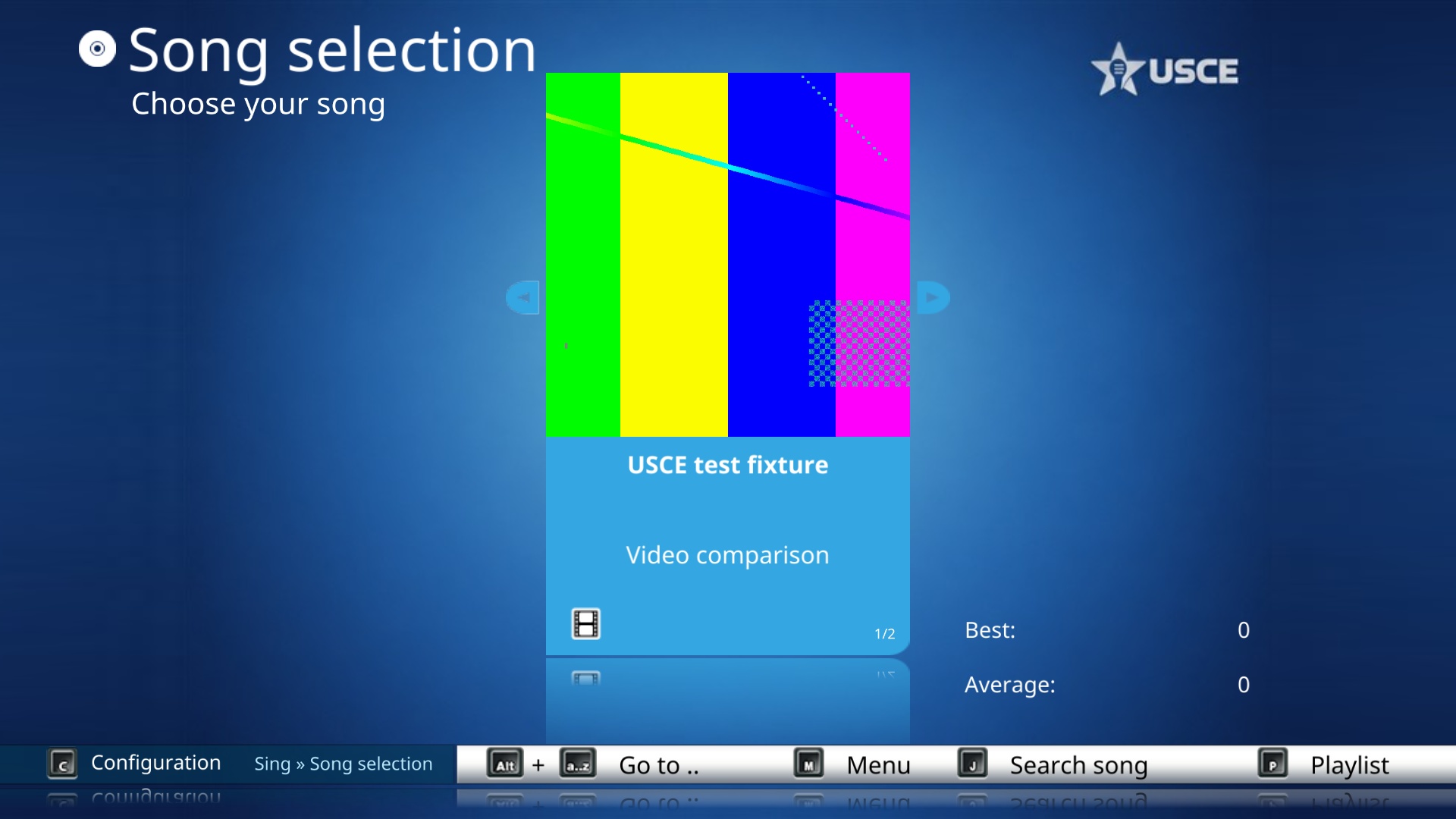
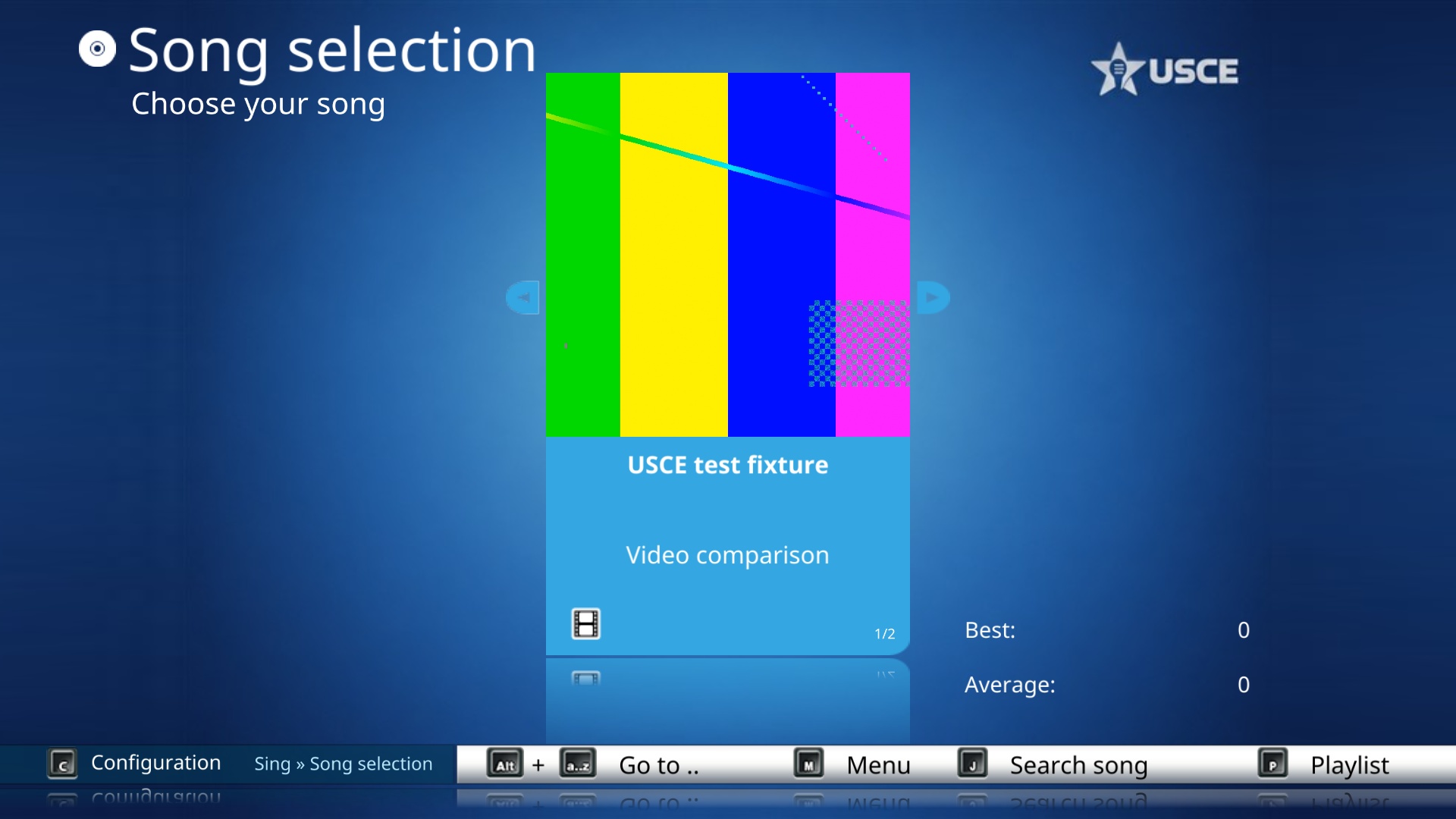
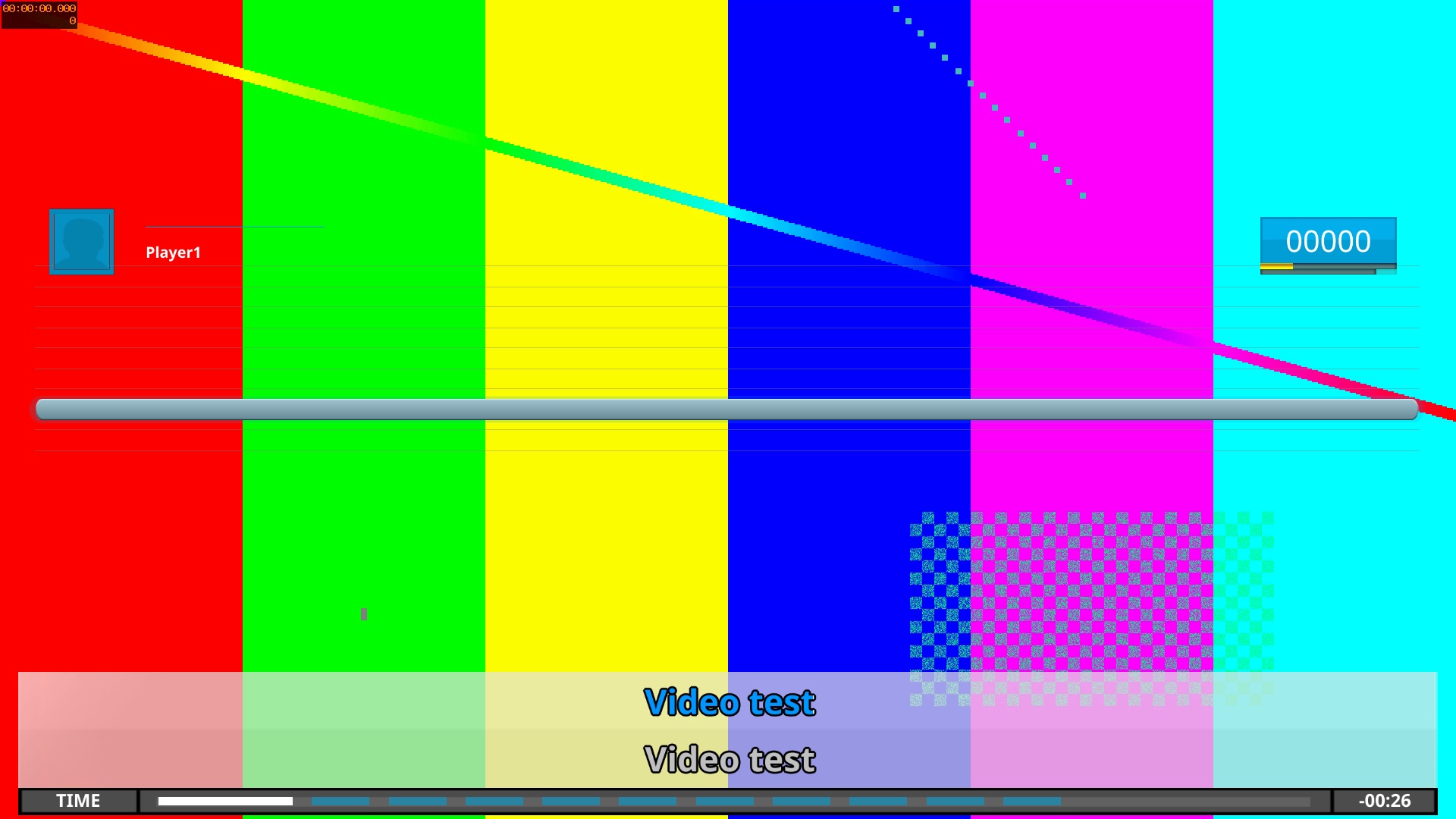
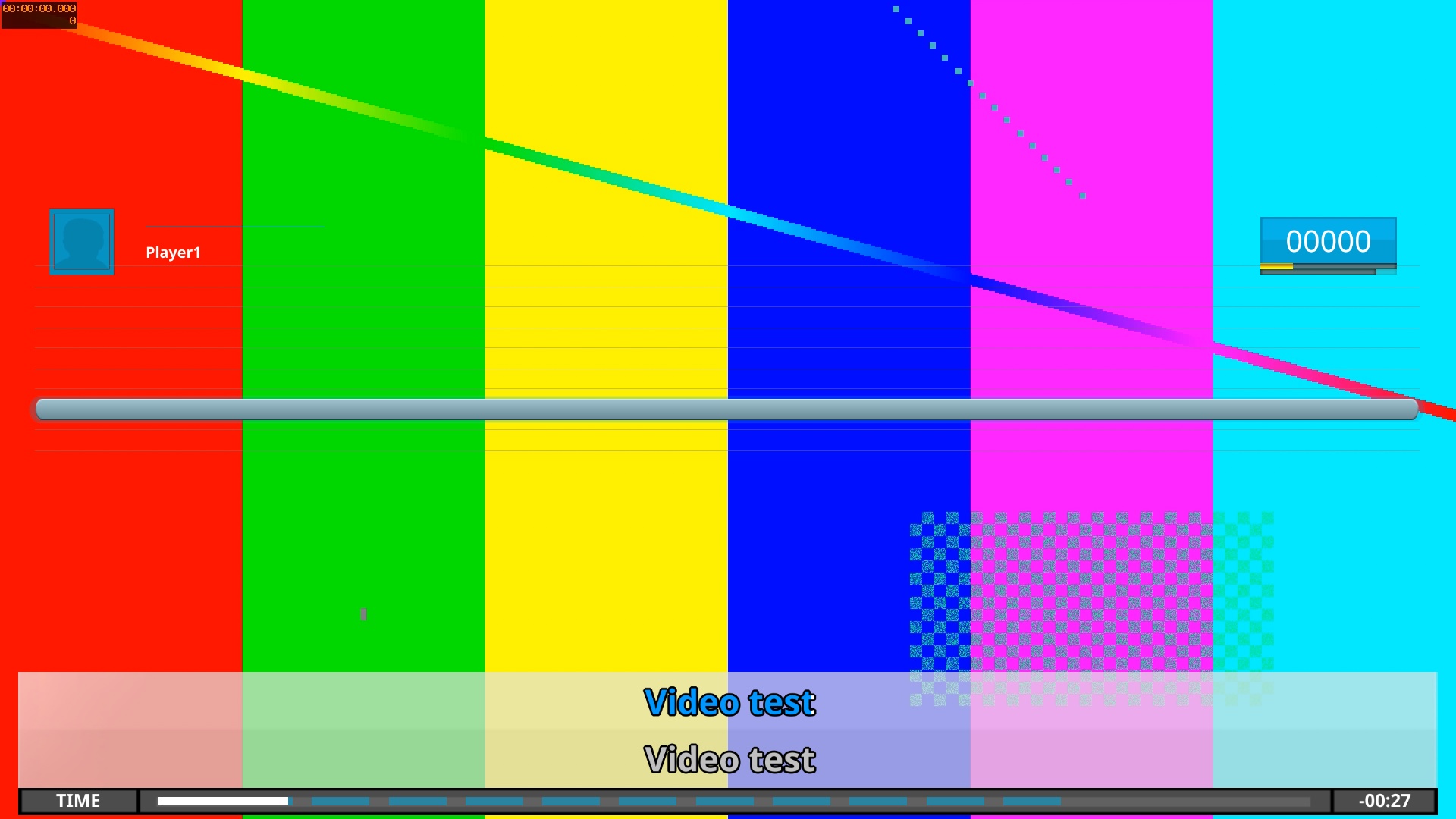
Intel i7-8550U / UHD Graphics 620, Ubuntu 26.04.1, Mesa 26.0.8, 1920x1080 game window, 60 fps cap. H.264 and HEVC auto selected Paired native framebuffer captures using the same generated 1080p H.264 pattern and pinned Modern theme:
Orientation, cropping and UI placement match in these captures. The color bars do expose a color-conversion difference between providers, so I would not call them pixel-identical. Matrix/range handling still needs review. The images are unretouched captures from a dedicated display/screen-API test harness; no original library artwork or music was uploaded. See capture provenance and limits. Microphone input and singing accuracy were not tested. |
|
@codex review Please check the optional/default provider selection and FFmpeg fallback, graphics-state restoration, color-matrix/range differences visible in the paired captures above, audio-clock synchronization through startup/pause/seek/EOF, resource ownership and multiple graphics contexts, and cross-platform build compatibility. |

Codex Review SummaryThis comment shows the latest Codex review activity on this pull request.
ℹ️ About Codex in GitHubYour team has set up Codex to review pull requests in this repo. Reviews are triggered when you
Codex reacts with 👀 while any review is running, comments if it has suggestions, and reacts with 👍 once all reviews finish with no findings. |
|
Codex Review: Didn't find any major issues. 🚀 Reviewed commit: ℹ️ About Codex in GitHubYour team has set up Codex to review pull requests in this repo. Reviews are triggered when you
If Codex has suggestions, it will comment; otherwise it will react with 👍. Codex can also answer questions or update the PR. Try commenting "@codex address that feedback". |
|
Green looks marginally different. |
|
One newer delta from @Tycorc is still missing here: a0904322. With The condition and test are absent at d759794. This is a remaining port delta from #235; it has not been applied or tested in USCE yet. |
With keep-open, libmpv holds a cleanly ended file instead of sending
END_FILE. A video stream that loads and starts but never yields a
decodable frame therefore waited the full 5 s open timeout before the
FFmpeg fallback took over. Fail as soon as eof-reached is set after the
playback restart and no frame has rendered.

The video smoke test generates an H.264 clip without its IDR slice and
checks that libmpv gives up on it in under 3 s.

(cherry picked from commit a090432)
|
@codex review Please review current head |
|
Codex Review: Didn't find any major issues. You're on a roll. Reviewed commit: ℹ️ About Codex in GitHubYour team has set up Codex to review pull requests in this repo. Reviews are triggered when you
If Codex has suggestions, it will comment; otherwise it will react with 👍. Codex can also answer questions or update the PR. Try commenting "@codex address that feedback". |
 dgruss
added
the
needs testing
 ChatGPT Codex Connector
|
#264's newer Tycorc snapshot adds 56ea7d9b: the Windows benchmark retains the process handle before playback and disposes it only after post-exit CPU accounting. Otherwise TotalProcessorTime can disappear after exit. Include this when adopting or running that benchmark; do not interpret failed CPU accounting as a performance result. The other newer commits merge upstream PrintScreen/completion changes already covered in USCE. |


Problem and resulting behavior
Port the optional libmpv video backend from Tycorc/USDX to USCE for assessment in #164. FFmpeg remains the default. Builds configured with
--with-mpvcan select MPV in Tools > Options > Graphics, with automatic or software decoding. Missing libmpv and render/open failures retain FFmpeg fallback. Song audio remains on USCE's existing audio clock.The port includes shared video presentation, renderer-owned offscreen targets, synchronization, startup/seek/EOF fixes, decoder probing and player reuse. USCE-specific sound helpers and current renderer behavior are preserved. No score/config schema migration or release packaging change is introduced.
Validation
Local Ubuntu 26.04.1 x86-64 laptop: Intel Core i7-8550U, Intel UHD Graphics 620/i915, Mesa 26.0.8, FFmpeg 8.0, libmpv 0.41.0.
vaapi-copy.CPU time during approximately 60 seconds of playback, with the game window at 1920x1080 and a 60 fps cap:
Mean resident memory:
These are exploratory single samples, in sequential order, with post-startup windows that are not aligned to precisely identical media timestamps. The inputs differ across codecs/resolutions, so compare modes within each row. CPU includes the whole game. All 60 focus samples were valid in each run; MPV did not fall back to the FFmpeg video provider. The fps cap is a setting, not a measurement of achieved fps. Frame times, dropped frames, long-term sync, microphone input and singing accuracy were not measured. Windows, macOS and Raspberry Pi were not tested.
Review notes
doc/mpv-port-provenance.md.Latest upstream follow-up: adopted @Tycorc's a090432 with its original authorship. A stream that reaches EOF without rendering a frame now fails promptly. The updated MPV-enabled Windows build and actual hidden-GL video smoke run pass: provider selection, FFmpeg/MPV playback, startup/reuse, missing/corrupt fallback and the no-frame clip. No-frame fallback took 109 ms, below the 3-second test limit and the former 5-second timeout. The smoke runner now keeps its Windows child console hidden while preserving redirected output.